
Warehouse Intelligence
Train a VLM to analyze forklift traffic patterns, storage utilization, and operational bottlenecks from warehouse camera feeds.
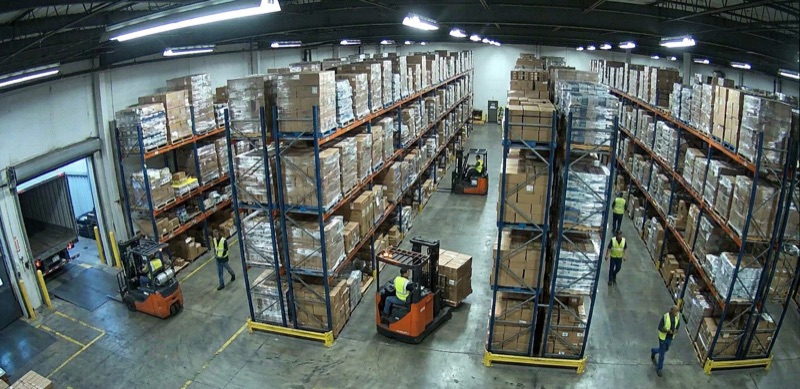
Most warehouses already have security cameras. Those cameras record footage that gets reviewed only after an incident. The same feeds contain valuable operational data: where forklifts travel, which aisles are congested, which storage slots sit empty, and where bottlenecks form during peak hours.
Datature Vi trains a model on your own camera footage to answer operational questions about your facility. You label frames showing different states (busy aisle, empty aisle, blocked path, underused storage) and the model learns to analyze new frames on its own. No new cameras or sensors needed.
This page covers operations analytics from camera feeds. For item-level tasks like damage detection, inventory counting, and label reading, see the Logistics and Warehousing guide.
For an interactive overview of this application, visit the warehouse intelligence use case on vi.datature.com.
Common applications
Choose your task type
Annotation examples
Deploy and test
from vi.inference import ViModel

model = ViModel(
    run_id="your-run-id",
    secret_key=".your-secret-key.",
    organization_id="your-organization-id",
)

result, error = model(
    source="warehouse_camera.jpg",
    user_prompt="What is the current state of this aisle?"
)

if error is None:
    print(result.result.answer)
Training tips
Use your existing cameras: train on frames from the security cameras already installed. No new hardware needed.
Label at regular intervals: for traffic analysis, label frames sampled every 5-10 minutes across a full shift to capture the natural ebb and flow of activity.
Cover all zones: different areas of the warehouse (receiving, staging, deep storage, shipping) have different "normal" patterns. Include examples from each zone.
Include shift transitions: the busiest periods are often shift changes and loading dock surges. Make sure these are represented in training data.
Next steps
Logistics and Warehousing
Item-level tasks: damage detection, inventory counting, shipment verification, and label reading.
Structured Data Extraction
Return structured JSON operational snapshots for dashboards and analytics.
Chain-of-Thought Reasoning
Multi-step warehouse assessments: traffic, then utilization, then recommendations.
Updated 6 months ago